
Stellwagen Bank National Marine Sanctuary
Stellwagen Bank NMS
What is Stellwagen Bank National Marine Sanctuary?
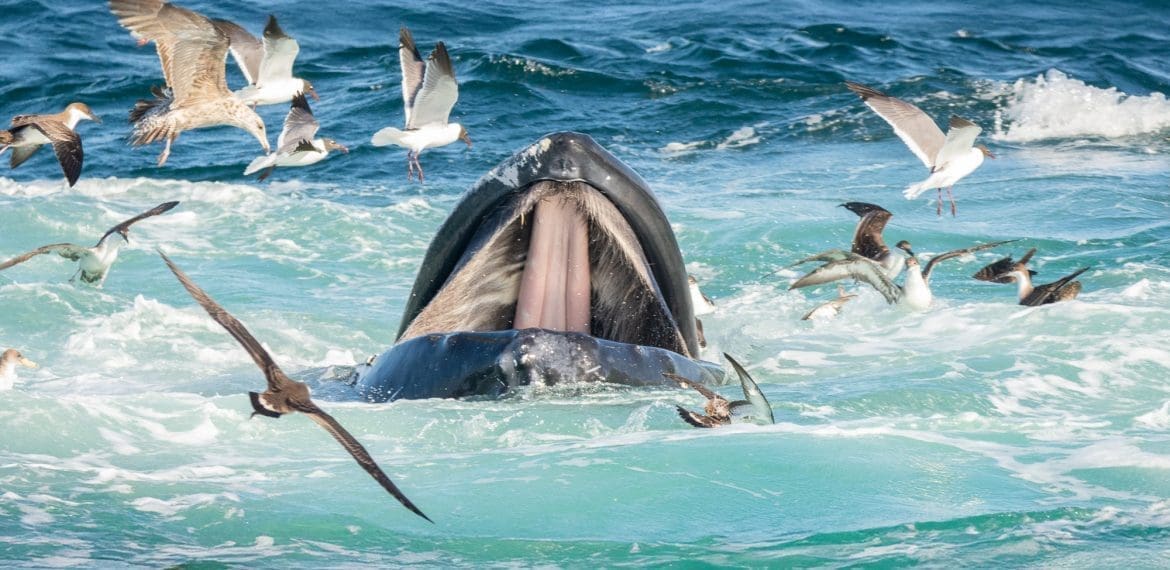
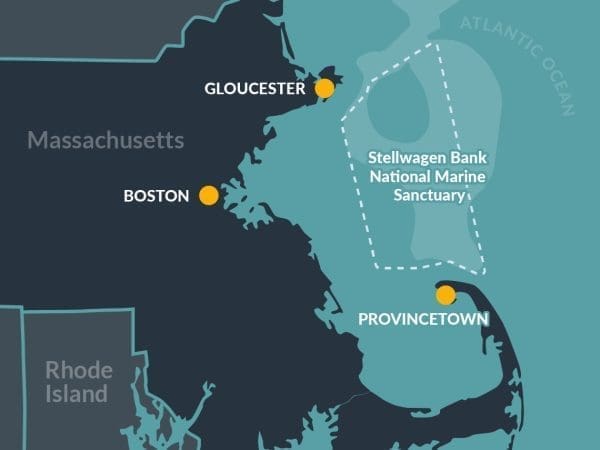
Stellwagen Bank National Marine Sanctuary was created in 1992 off the coast of Massachusetts to protect a rich diversity of marine life. Covering 842 square miles, the sanctuary is famous for Humpback, Finback, and Right whales, but its purpose extends far beyond these charismatic species. It safeguards all the creatures that depend on these waters for all or part of their life cycle.
The sanctuary was named after its main geologic feature, a shallow, underwater sandbar known as “Stellwagen Bank,” though it also includes other important areas, most notably Jeffrey’s Ledge just to the north.
Stellwagen Bank sits directly between Cape Ann and Cape Cod. The sanctuary encompasses Stellwagen Bank itself, a broad underwater sandbar roughly 24 miles long and 3–14 miles wide, as well as Jeffrey’s Ledge. The bank rises above the surrounding seafloor by the height of an 11-story building, creating unique underwater topography that shapes the local ecosystem.
Quick Facts & Stats
Established
in 1992

842 Square
Miles in Size

Depth of
65–350 Feet

Between Cape Ann
and Cape Cod

Why This Area Is So Productive
The shape of the seafloor at Stellwagen Bank directs ocean currents in ways that bring nutrient-rich waters from the depths to the surface. Sunlight, oxygen, and nutrients combine to fuel massive annual plankton blooms. This microscopic life forms the base of the food chain, supporting fish, birds, seals, and, of course, the whales that make Stellwagen Bank famous.
Wildlife the Sanctuary Protects
Stellwagen Bank provides a home or feeding ground for an incredible variety of wildlife
Whales, Dolphins & Porpoises
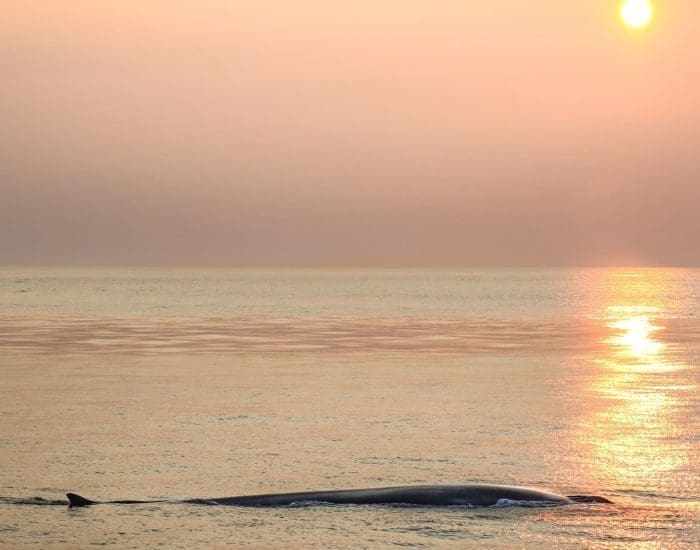
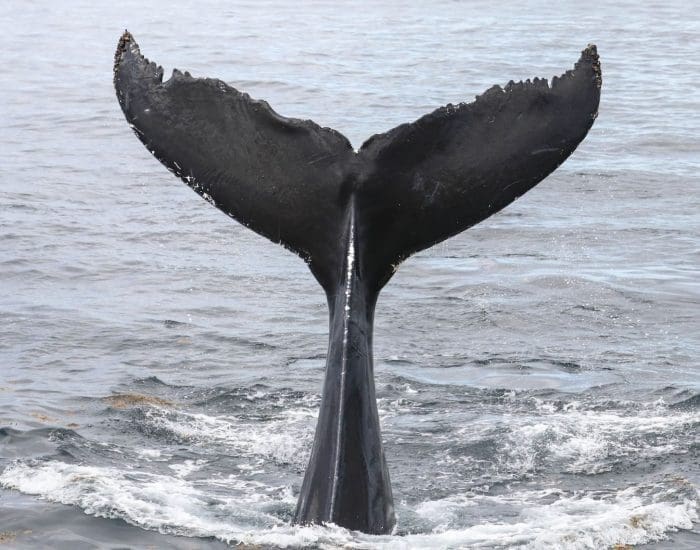
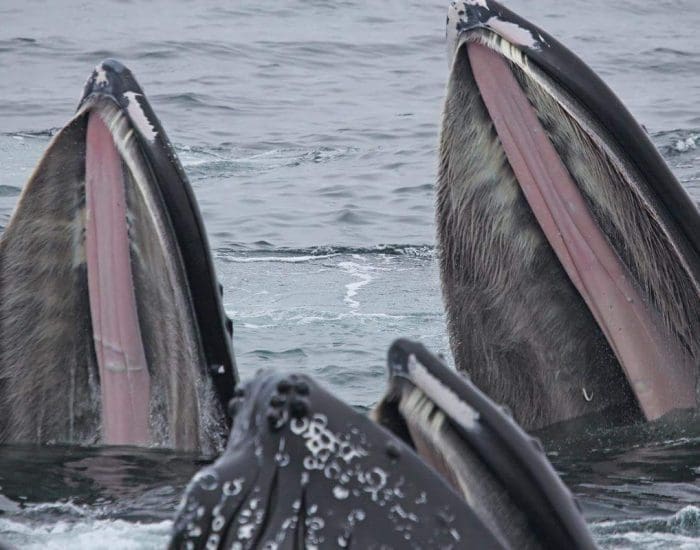
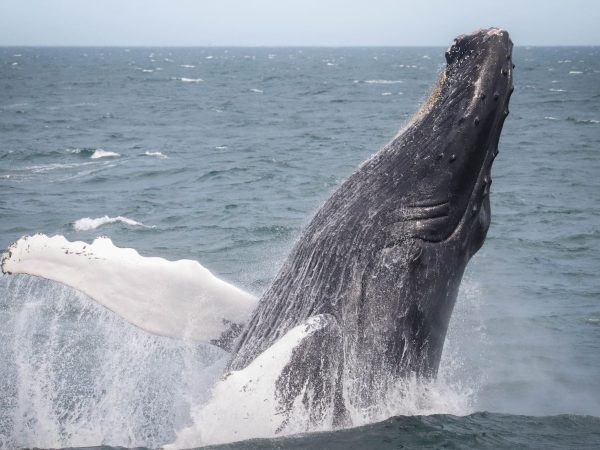
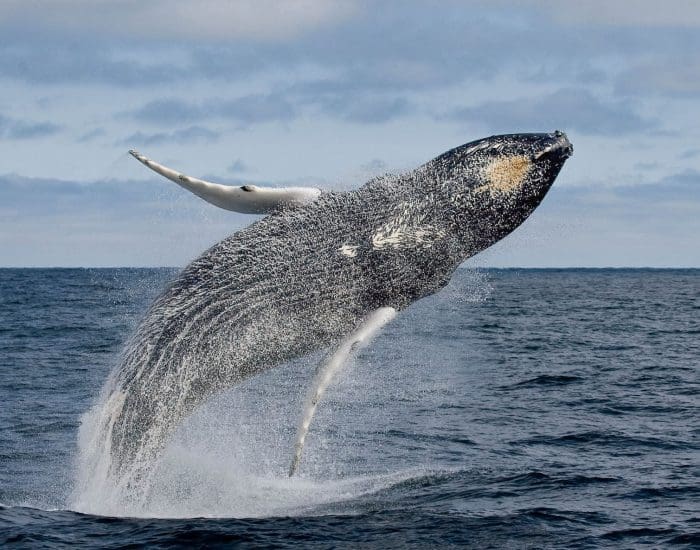
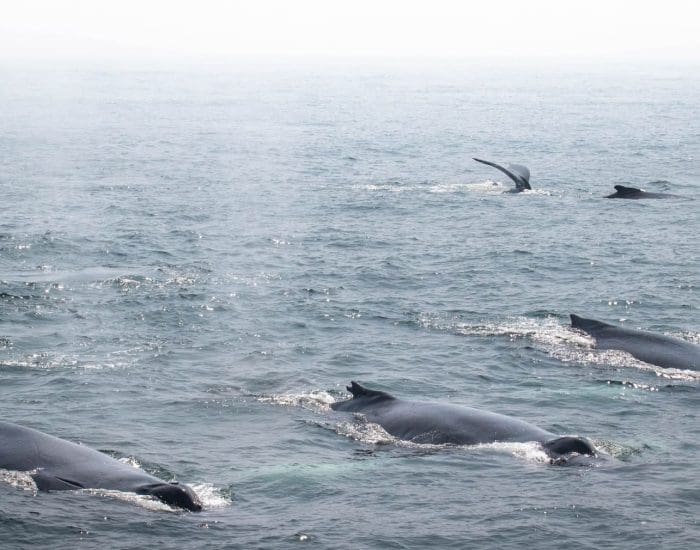
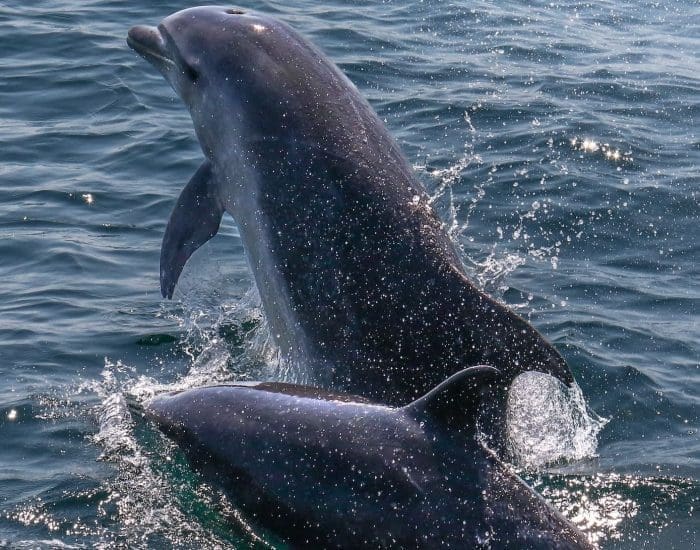
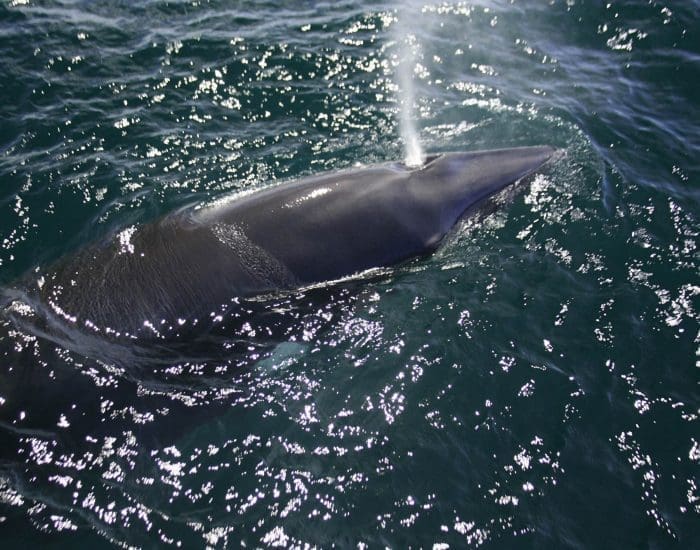
Stellwagen Bank National Marine Sanctuary supports an incredible diversity of cetaceans, including humpback whales, fin whales, minke whales, North Atlantic right whales, sei whales, along with several species of dolphins, most notably the Atlantic white-sided dolphin. Harbor porpoises are also frequent visitors, often seen quietly traveling or feeding in smaller groups.
Sharks & Other Fish
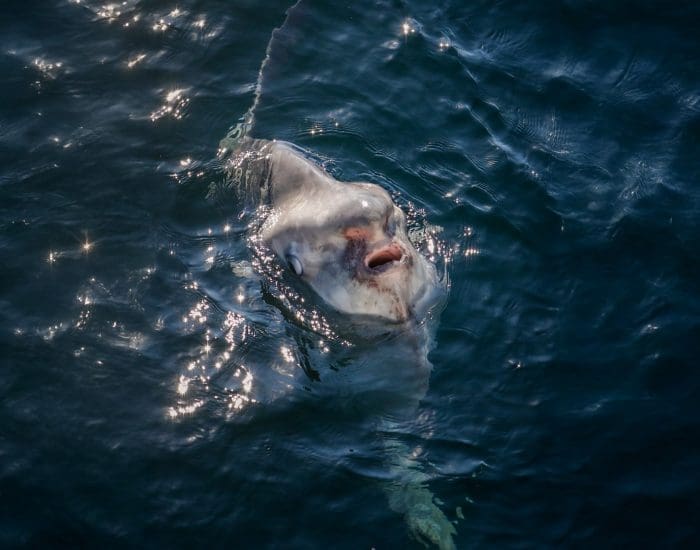
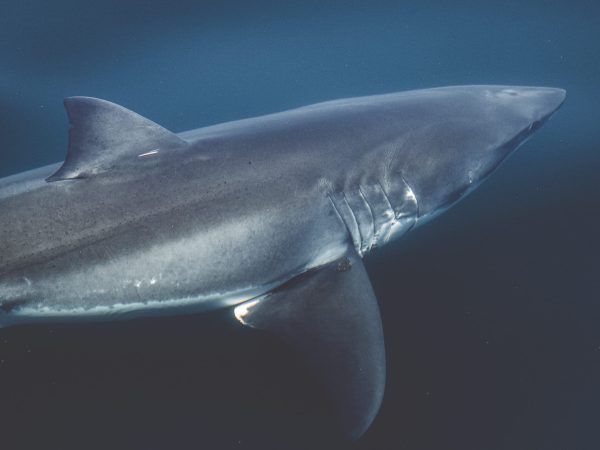
Stellwagen Bank National Marine Sanctuary supports a variety of sharks and other pelagic fish that play a vital role in maintaining the balance of this ecosystem. Whale watches are one of the best opportunities to observe these species. From powerful Atlantic bluefin tuna cutting through schools of fish to sighting of sharks such as basking sharks, blue sharks and white sharks.
Seabirds
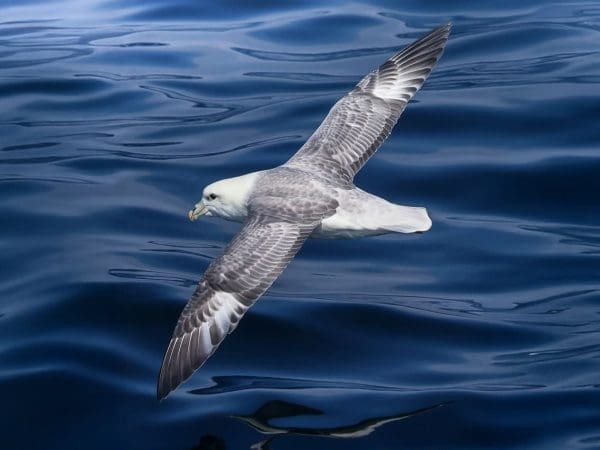
The Sanctuary is an exciting destination for seabird watching, attracting a wide variety of species that use the area as a summer or winter feeding ground, or as a vital stopover along migratory routes. From the Wilsons storm-petrels dancing across the surface to the powerful Northern gannets plunging from above, the sanctuary offers an ever-changing display of seabird activity that reflects the productivity of this ecosystem.
Seals
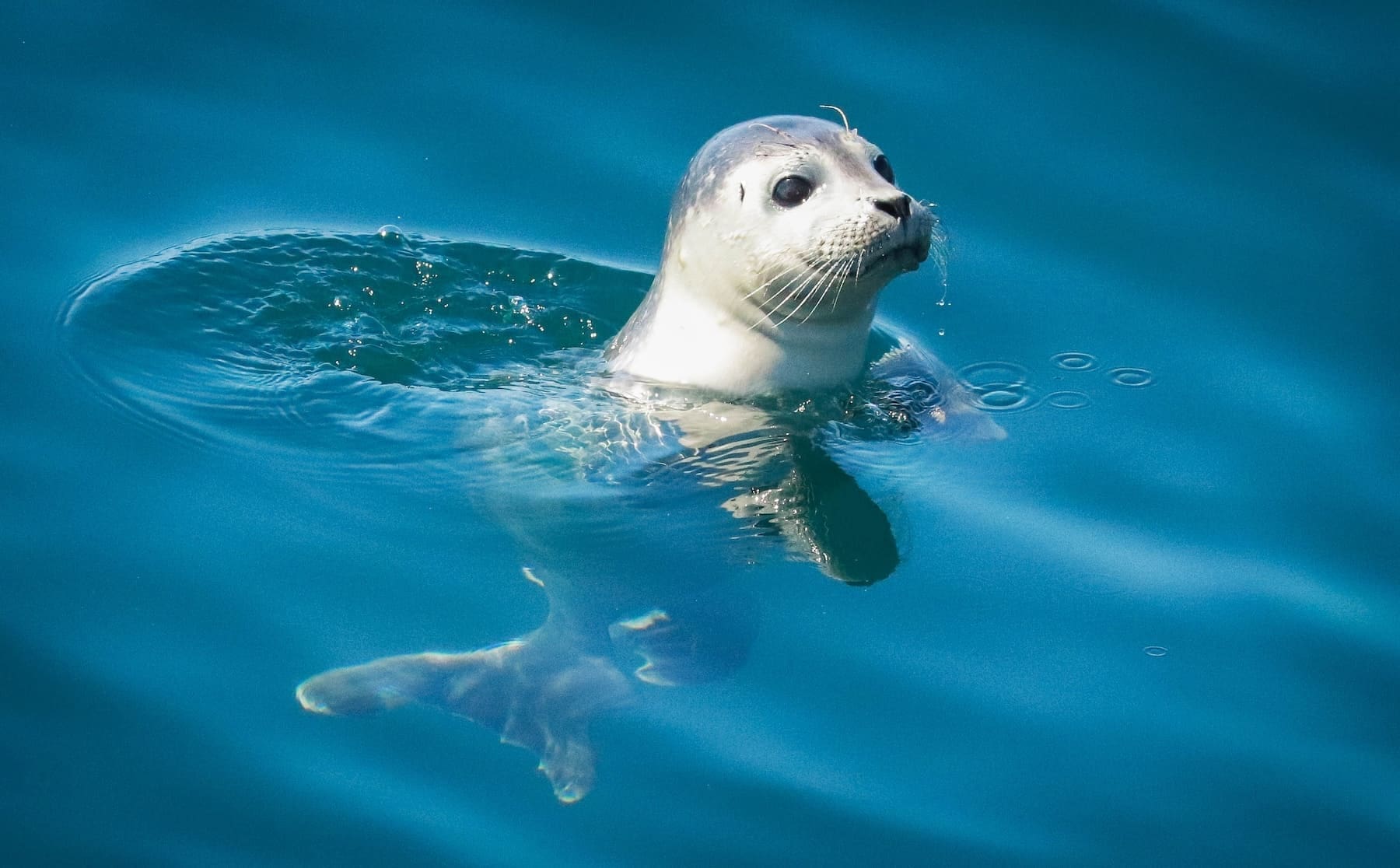
The primary seal species found in and around the National Marine Sanctuary are gray seals and harbor seals. While they breed and haul out along Cape Ann’s rocky coastline, these seals regularly travel offshore into the sanctuary to feed. Sightings often include individuals actively foraging, offering a glimpse into how they are closely connected to the rich and productive waters of this unique marine environment.
Turtles
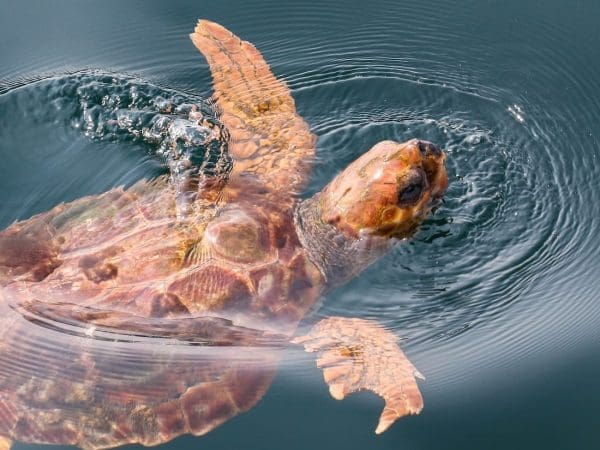
Stellwagen Bank National Marine Sanctuary provides important seasonal foraging habitat for several species of sea turtles. During the warmer months, leatherback, loggerhead, and Kemp’s ridley sea turtles are the most commonly observed species in the sanctuary, taking advantage of its abundant food resources. These turtles are often drawn to the area to feed on jellyfish and other prey.
This extraordinary concentration of life is made possible by the bank’s unique underwater geography.
A Protected Marine Environment
As a National Marine Sanctuary, Stellwagen Bank is legally protected from many human activities that could harm its ecosystem. This ensures the long-term survival of its marine life and preserves the natural processes that make it such a rich feeding ground.
Did You Know?
Stellwagen Bank averages 80–100 feet in depth, with some areas on the southern end as shallow as 60 feet. This relatively shallow bank is surrounded by much deeper basins, where depths quickly drop to 250–350 feet. These dramatic changes in seafloor topography influence how tides and currents move through the region. As deep, nutrient-rich waters are pushed upward along the steep edges of the bank, a process known as upwelling, they deliver essential organic and inorganic nutrients to the surface. Combined with sunlight and oxygen, these conditions create an ideal environment for phytoplankton, microscopic, plant-like organisms, to bloom. These blooms are among the most productive in the world and form the foundation of the Gulf of Maine’s food web, supporting everything from small fish to the largest animals on Earth, including the blue whale.
Great Wildlife Watching on Stellwagen Bank National Marine Sanctuary
The currents and nutrients that shaped Stellwagen Bank continue to support massive plankton blooms, creating one of the most productive marine ecosystems in the Northwest Atlantic.
Learn More On The Water.
Our naturalists onboard explain the lives of whales, dolphins, fish, seabirds, and the fascinating geology that underpins the sanctuary’s ecosystem.

